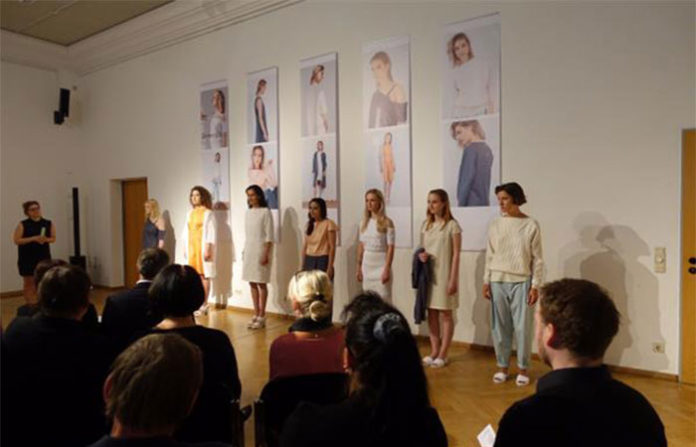

Technology, creativity and sustainability; these are now at the forefront of the most sought after criteria in the fashion world today. At the same time Babette Sperling, who brings these elements together in her collection, also made a speech to the fashion sector with the message of sensitivity to the disability.
We know that 3D technology is now entering the fashion world with both modelling and printing possibilities. The 3D outfits shown at the many of the fashion week events that took place during the past period collected the likes of fashion critics and users. A 3D collection at Mercedes Fashion Night held in Berlin received a full note from the participants thanks to both the image and the message to environment.
Designed by Babette Sperling, a design student at Zwickau University in Germany, this collection is a bit different from earlier 3D fashion work. Practical and wearable in everyday life, the pieces of this collection have braille embossed. After the pieces of the collection were produced, these relief letters, which were printed on the clothes again with 3D technology, once again reminded the participants of the rights of the disabled. Successful braille work was done before that with 3D printing; but Sperling’s work attracts attention as a first in its field with a message of aesthetics and sensitivity.

Sperling’s braille embroideries have been integrated into the clothes and have benefited from 3D; indicating that the garments are easy to wear and sustainable during the production process. The fashion designer who is aiming to print the embossed letters directly on the clothes with an FDM printer; is quite difficult to find a plastic raw material that adheres to the clothes. In this context, Sperling has experimented with many filaments and different fabric types; and decided that the BioInspiration filament is the most appropriate.
Sustainability is inspiring
BioInspiration, a Germany-based raw material venture, has been a first in the additive manufacturing market with WillowFlex filament, which produces completely degradable (fertilizable) raw materials in nature. Resistant to 105 degrees heat and -15 degrees cold, this material was developed to be compatible with FDM printers. WillowFlex, which provides adhesive and durable layers in the printing process, provides design flexibility with 10 different colors. Prior to this, the preferred filament for environmentally friendly 3D shoe production was used in the collection; for the production of braille letters as well as for buttons on fabric. Stating that WillowFlex is a perfect fit for the fashion industry, Sperling points out that the product is 100% recyclable; “This eco-friendly raw material completes the entire sustainability concept of the entire collection”.

The Mercedes Fashion Night; which was presented to the audience, was also crowned with a prize; attracting attention with its aesthetic and environment-friendly features. This collection, which shows that 3D technology can meet wearable and sustainable demand, is also expected to inspire other designers.